Understanding the “Doss Swallowing Scale” PDF
The Doss Swallowing Scale PDF facilitates dysphagia assessment, offering a structured method for clinicians to evaluate a patient’s swallowing abilities and potential risks.
What is the Doss Swallowing Scale?
The Doss Swallowing Scale is a clinical tool designed for the bedside assessment of dysphagia – difficulty swallowing. It’s a standardized observational assessment, meaning it relies on a clinician’s direct observation of a patient consuming various food textures and liquid consistencies. Unlike instrumental assessments like a Modified Barium Swallow Study (MBSS), it doesn’t require specialized equipment or radiation exposure.
The scale focuses on identifying signs of swallowing impairment, such as delayed swallow initiation, prolonged oral residue, coughing, or changes in voice quality during and after swallowing. It provides a systematic way to document these observations and assign a severity score, aiding in the diagnosis and management of dysphagia. It’s a valuable initial step in evaluating swallowing function, particularly in settings where immediate instrumental assessment isn’t feasible.
Historical Context and Origins
The Doss Swallowing Scale emerged from the need for a readily available, non-invasive method to assess dysphagia in clinical practice. While precise details regarding its initial development are somewhat limited in readily available public documentation, it gained prominence as clinicians sought alternatives to solely relying on instrumental assessments like the Modified Barium Swallow Study (MBSS).
The scale’s creation reflects a growing understanding of the complexities of swallowing and the importance of early identification of dysphagia. It likely evolved through clinical experience and refinement, aiming to provide a standardized observational framework. Its widespread adoption suggests it filled a crucial gap in dysphagia assessment, offering a practical tool for initial screening and monitoring, particularly in bedside settings where accessibility to advanced diagnostics is restricted.
Purpose of the Scale: Assessing Dysphagia
The Doss Swallowing Scale’s primary purpose is to provide a systematic, observational assessment of dysphagia – difficulty swallowing. It aims to identify individuals at risk of aspiration, which is the entry of food or liquid into the airway, and to characterize the nature and severity of their swallowing impairment. This assessment isn’t a diagnostic tool in itself, but rather a screening mechanism to guide further evaluation.

Clinicians utilize the scale to evaluate various aspects of the swallowing process, including oral preparation, oral transit, pharyngeal initiation, and pharyngeal clearance. The scale helps determine if a patient requires a more detailed instrumental assessment, like an MBSS, and informs the development of appropriate treatment strategies to improve swallowing safety and efficiency.

Components of the Doss Swallowing Scale
The Doss Swallowing Scale incorporates detailed scoring categories, behavioral observations, and rating levels to comprehensively evaluate swallowing function and impairment severity.
Detailed Breakdown of Scoring Categories
The Doss Swallowing Scale utilizes a scoring system encompassing several key areas of swallowing physiology. These categories meticulously assess oral preparation, oral transit, pharyngeal initiation, pharyngeal transit, and residue presence. Each stage receives a score ranging from 0 to 3, with 0 indicating normal function and 3 representing severe impairment.
Oral preparation evaluates lip closure, bolus formation, and anterior spillage. Oral transit focuses on tongue movement and bolus control. Pharyngeal initiation assesses the timing of swallow onset, while pharyngeal transit examines the movement of the bolus through the pharynx. Finally, residue assessment notes any remaining material after the swallow.
These detailed categories allow clinicians to pinpoint specific areas of difficulty, providing a nuanced understanding of the patient’s dysphagia. The cumulative score then informs the overall severity level.
Behavioral Observations Assessed
The Doss Swallowing Scale emphasizes careful observation of patient behaviors during the assessment. Clinicians note signs like coughing, throat clearing, and voice quality changes – indicators of potential aspiration risk. Facial symmetry and the presence of drooling are also observed, reflecting oral motor control.
Effortful swallowing, prolonged meal times, and multiple swallows per bolus are documented, suggesting increased swallowing difficulty. The patient’s ability to self-correct, such as wiping away residue, provides insight into awareness and compensatory strategies.
These behavioral cues, combined with the scoring categories, create a comprehensive picture of the patient’s swallowing function. Accurate observation is crucial for reliable assessment and appropriate intervention planning.
Rating Levels: From Normal to Severe Impairment
The Doss Swallowing Scale utilizes a tiered rating system to categorize swallowing impairment. A score of ‘1’ indicates normal swallowing, characterized by no observable difficulties or compensatory strategies. Scores progress to ‘2’ for mild impairment, potentially involving slight delays or occasional throat clearing.
Moderate impairment, rated as ‘3’, often presents with frequent coughing or wet vocal quality. A score of ‘4’ signifies severe impairment, demonstrating significant aspiration risk and requiring substantial compensatory efforts.
These levels guide clinical decision-making, informing the need for dietary modifications, therapy interventions, or further diagnostic testing. The scale’s granularity allows for nuanced assessment and tracking of progress over time.
Using the Doss Swallowing Scale PDF
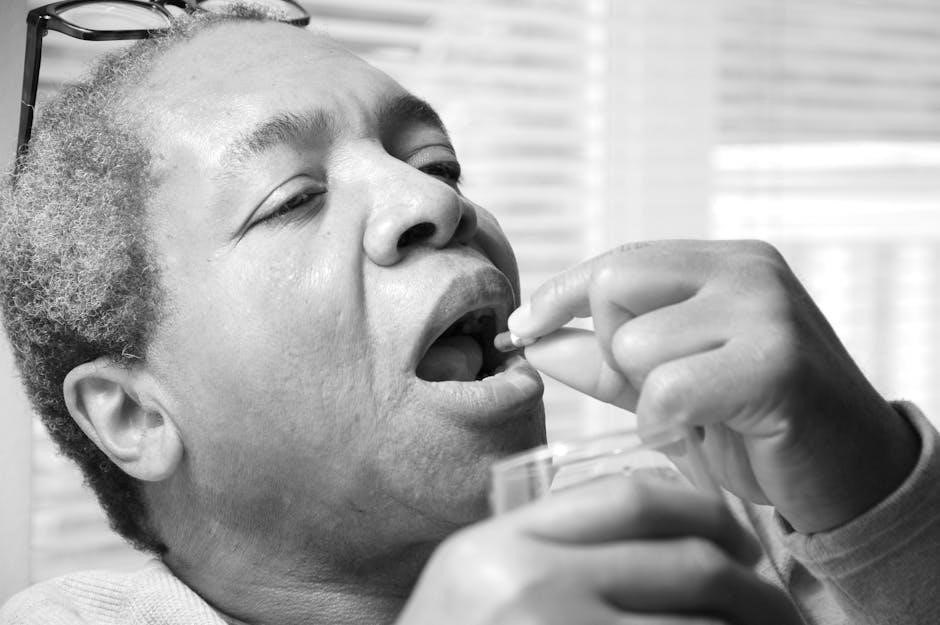
The Doss Swallowing Scale PDF guides clinicians through a systematic assessment process, ensuring standardized evaluation of a patient’s swallowing function during mealtime.

Step-by-Step Guide to Administration
Initial Preparation: Begin by thoroughly reviewing the Doss Swallowing Scale PDF to familiarize yourself with the scoring criteria and behavioral observations. Ensure a quiet, well-lit environment conducive to focused assessment. Gather necessary materials, including various food textures (pureed, mechanically altered, regular) and liquids of different consistencies.
Patient Positioning: Seat the patient upright, typically at a 90-degree angle, to optimize swallowing mechanics. Observe their posture and ability to maintain an upright position independently.
Food Presentation: Offer small bolus sizes of each food texture and liquid, allowing the patient to self-feed if possible. Carefully observe each swallow, noting any signs of difficulty or compensatory strategies.
Scoring: Utilize the Doss Swallowing Scale PDF to systematically score each aspect of the swallow, documenting observations for each bolus type.
Post-Swallow Observation: Monitor for any residual material, coughing, or changes in voice quality after each swallow.
Materials Required for Assessment
Essential Resources: A current copy of the Doss Swallowing Scale PDF is paramount for accurate scoring and standardized evaluation. Access to a variety of food textures – pureed, mechanically altered (soft, minced), and regular – is crucial for assessing swallowing function across consistencies.
Liquid Options: Include thin, thickened (nectar-thick, honey-thick), and potentially pudding-thick liquids to evaluate liquid swallowing safety. Standardized bolus sizes (e.g;, 5ml, 10ml) are recommended for consistency.
Additional Supplies: A timer for observing swallow timing, a suction device for immediate aspiration management, and tissues are practical necessities. Documentation materials – pen and paper or a digital device – are needed for recording observations and scores.
Optional Tools: A flashlight can aid in oral cavity visualization, and a mirror may help patients observe their own swallowing mechanics.
Patient Positioning and Preparation
Optimal Posture: The patient should be seated upright at a 90-degree angle, ensuring good head and neck alignment. Chin tucking may be considered based on individual needs, but should be documented. Proper positioning minimizes aspiration risk and maximizes swallowing efficiency.
Pre-Assessment Instructions: Explain the procedure clearly to the patient, addressing any anxieties. Ensure the patient understands the need to swallow naturally and to signal any difficulty. A brief oral motor examination may precede the formal assessment.
Environmental Considerations: Minimize distractions in the testing environment. Have necessary materials readily available to maintain a smooth workflow. Prepare for potential coughing or aspiration with suction equipment nearby.
Patient Comfort: Prioritize patient comfort throughout the assessment process.

Interpreting the Results
Doss Swallowing Scale scores indicate swallowing impairment severity, guiding clinical decisions regarding diet modifications and therapy interventions for improved safety.
Scoring Interpretation and Severity Levels
The Doss Swallowing Scale utilizes a hierarchical scoring system, typically ranging from 1 to 10, though variations exist. Lower scores (1-3) generally indicate normal swallowing function with minimal to no observable difficulties. These patients may exhibit slight delays or minor residue, but maintain airway protection.
Moderate impairment (4-6) suggests noticeable swallowing challenges, potentially including delayed swallow initiation, moderate residue, and some compensatory strategies. Higher scores (7-10) signify severe dysphagia, characterized by significant residue, frequent coughing or throat clearing, and compromised airway protection, indicating a high risk of aspiration.
Clinicians must consider the entire clinical picture, not solely the numerical score, when determining severity and appropriate interventions. Consistent scoring and detailed documentation are crucial for tracking patient progress.
Correlation with Penetration/Aspiration Risk
The Doss Swallowing Scale, while valuable, doesn’t directly measure penetration or aspiration; it assesses observable signs suggestive of these risks. Higher scores, indicating greater swallowing impairment, correlate with an increased likelihood of material entering the airway (penetration) and reaching the lungs (aspiration).
However, the scale’s predictive value isn’t absolute. Some patients may score moderately but still exhibit minimal aspiration, while others with lower scores could experience silent aspiration. Therefore, the scale should be used in conjunction with other diagnostic tools, like a Modified Barium Swallow Study (MBSS), for a comprehensive assessment.
Clinical judgment remains paramount in interpreting the scale’s findings and determining appropriate management strategies to mitigate aspiration risk.
Limitations of the Scale
The Doss Swallowing Scale relies heavily on visual observation, making it susceptible to subjective interpretation by the clinician. Inter-rater reliability can vary, impacting consistency in scoring. It doesn’t assess sensory aspects of swallowing, like awareness of residue, or the physiological mechanisms involved.
Furthermore, the scale is best suited for individuals with moderate to severe dysphagia; its sensitivity may be limited in detecting mild impairments; It also doesn’t directly evaluate the efficiency of swallowing, only the safety.
Therefore, the Doss Swallowing Scale should be considered one component of a broader dysphagia assessment, complemented by instrumental evaluations for a complete picture.

Doss Swallowing Scale vs. Other Dysphagia Assessments
Comparing the Doss Swallowing Scale to methods like the Penetration-Aspiration Scale and Modified Barium Swallow Study reveals differing strengths and weaknesses in dysphagia evaluation.
Comparison with the Penetration-Aspiration Scale
The Penetration-Aspiration Scale (PAS), often used during a Fiberoptic Endoscopic Evaluation of Swallowing (FEES), focuses intensely on visualizing food or liquid entry into the airway. While the Doss Swallowing Scale provides a broader behavioral assessment, the PAS offers direct observation of aspiration events.
Key differences lie in their methodologies; Doss relies on clinical observation of swallowing function, whereas PAS is an instrumental assessment. The Doss Scale is quicker to administer, suitable for initial screening, but lacks the definitive aspiration confirmation of the PAS.
Clinicians often use both scales complementarily – the Doss Scale for initial risk stratification, followed by a FEES with PAS if aspiration risk is indicated. This combined approach provides a comprehensive understanding of the patient’s dysphagia.
Differences from the Modified Barium Swallow Study (MBSS)
The Modified Barium Swallow Study (MBSS), also known as a videofluoroscopic swallow study, is a dynamic radiographic assessment. It utilizes barium-coated foods and liquids to visualize the entire swallowing process, from oral preparation to esophageal transit. In contrast, the Doss Swallowing Scale is a clinical bedside assessment, relying on observation without radiation exposure.
MBSS provides detailed anatomical and physiological information, identifying specific areas of dysfunction and aspiration; The Doss Scale offers a quicker, more accessible initial evaluation, but lacks the precise visualization of the MBSS.
While MBSS is considered the “gold standard” for dysphagia diagnosis, the Doss Scale serves as a valuable screening tool, helping determine the need for further instrumental assessment like MBSS.
Advantages and Disadvantages of Each Method
The Doss Swallowing Scale’s advantages include its speed, accessibility, and lack of radiation. It’s cost-effective and can be performed at the bedside, making it ideal for initial screening and monitoring. However, it’s subjective, relying on clinician interpretation and offering limited anatomical detail.
Conversely, the Modified Barium Swallow Study (MBSS) provides objective, detailed visualization of the swallowing mechanism, pinpointing aspiration risk and specific impairments. Its disadvantages are significant: it involves radiation exposure, requires specialized equipment and trained personnel, and is more time-consuming and expensive.
Ultimately, the choice depends on the clinical context. The Doss Scale is excellent for quick assessments, while MBSS is crucial for definitive diagnosis and complex cases.
Practical Applications & Clinical Use
The Doss Swallowing Scale PDF guides treatment planning, tracks therapy progress, and ensures thorough documentation of swallowing function for improved patient outcomes.
Role in Developing Treatment Plans
The Doss Swallowing Scale PDF plays a crucial role in formulating individualized treatment plans for patients experiencing dysphagia. By pinpointing specific areas of swallowing impairment – relating to oral preparation, oral transit, pharyngeal transit, and esophogeal transit – clinicians can tailor interventions to address the patient’s unique needs.
The scale’s detailed scoring allows for objective identification of deficits, informing decisions regarding diet modifications (texture and liquid consistencies), swallowing strategies (e.g., chin tuck, head rotation), and appropriate therapeutic exercises.
Furthermore, the assessment helps determine the need for further diagnostic testing, such as a Modified Barium Swallow Study (MBSS), if the initial evaluation suggests a higher risk of aspiration. Ultimately, the scale’s insights contribute to safer and more effective swallowing rehabilitation.
Monitoring Progress During Therapy
The Doss Swallowing Scale PDF is invaluable for tracking a patient’s improvement throughout dysphagia therapy. Repeated administration of the scale at regular intervals provides objective data demonstrating changes in swallowing function over time. This allows clinicians to assess the effectiveness of implemented interventions and make necessary adjustments to the treatment plan.
By comparing scores across assessments, therapists can identify areas where the patient is progressing well and areas requiring continued focus.
Documented changes in scores serve as tangible evidence of rehabilitation success, supporting continued therapy authorization and demonstrating positive patient outcomes. The scale’s consistent application ensures reliable monitoring and facilitates data-driven clinical decision-making.
Documentation and Reporting
The Doss Swallowing Scale PDF results must be thoroughly documented within the patient’s medical record. Detailed reporting should include the specific scores achieved in each category, along with a clear description of the observed clinical behaviors that contributed to those scores. This comprehensive documentation provides a precise snapshot of the patient’s swallowing abilities at a given point in time.
Accurate reporting facilitates effective communication among the interdisciplinary team, including physicians, speech-language pathologists, and nurses.
The scale’s standardized format ensures consistency in reporting, aiding in data analysis and quality improvement initiatives. Proper documentation supports billing and reimbursement claims, demonstrating the medical necessity of dysphagia therapy.

Accessing and Utilizing the PDF Resource
The Doss Swallowing Scale PDF is available through professional organizations and educational institutions, ensuring clinicians have access to this valuable assessment tool.
Finding Reliable Sources for the Doss Swallowing Scale PDF
Locating a trustworthy Doss Swallowing Scale PDF requires careful consideration. Direct access from the original developers or reputable speech-language pathology organizations is paramount; Avoid downloading from unofficial or unknown websites, as these may contain outdated, inaccurate, or even compromised versions of the scale.
Professional associations like the American Speech-Language-Hearing Association (ASHA) often provide resources or links to validated assessment tools, potentially including the Doss Swallowing Scale. University libraries and medical institutions with speech pathology programs are also excellent sources. Always verify the document’s authenticity by checking for official logos, publication dates, and author credentials. Prioritize sources that guarantee the PDF’s integrity and alignment with current clinical standards to ensure accurate patient assessment.
Ensuring PDF Authenticity and Validity
Verifying the Doss Swallowing Scale PDF’s authenticity is crucial for reliable clinical application. Scrutinize the document for official branding – logos of the originating organization or authors – and a clear publication or revision date. Compare the content against known descriptions of the scale’s components and scoring criteria found in peer-reviewed literature or established textbooks.
Look for watermarks or security features indicating a legitimate source. Be wary of PDFs lacking author information or displaying inconsistencies in formatting. Cross-reference with professional databases or consult with experienced speech-language pathologists to confirm its validity. Utilizing a current, validated version safeguards accurate patient assessment and minimizes the risk of misinterpretation, ultimately supporting optimal dysphagia management.
Digital vs. Printed Versions: Considerations
Choosing between a digital Doss Swallowing Scale PDF and a printed copy depends on clinical workflow and preferences. Digital versions offer portability, easy searchability, and potential integration with electronic health records. However, ensure device compatibility and reliable access during assessments. Printed copies eliminate reliance on technology and may be preferred for environments with limited digital infrastructure.
Consider the risk of unauthorized copying with digital files and implement appropriate security measures. Regardless of format, maintain a clear audit trail of scale usage and scoring. Regularly update digital PDFs to reflect the latest revisions. Prioritize a version that facilitates accurate and efficient data collection, supporting consistent and reliable dysphagia evaluations.