Understanding Manual Water Softener Regeneration
Manual regeneration is a crucial process for maintaining water softener efficiency, ensuring consistently soft water by replenishing the resin beads’ sodium supply.
This cycle effectively removes accumulated hardness minerals, like calcium and magnesium, restoring the system’s ability to exchange ions and deliver optimal performance.
Understanding this process empowers homeowners to proactively manage their water quality and extend the lifespan of their water softening equipment.
What is Water Softening and Why Regenerate?
Water softening is the process of removing dissolved minerals, primarily calcium and magnesium, that cause water “hardness.” Hard water leads to scale buildup in pipes and appliances, reduces soap effectiveness, and can leave unsightly residue. Water softeners utilize a process called ion exchange to address this, replacing hardness minerals with sodium or potassium ions.

Regeneration is essential because the resin beads within the softener have a finite capacity to capture hardness minerals. As they become saturated, their ability to soften water diminishes. The regeneration cycle reverses the ion exchange process, flushing out the accumulated calcium and magnesium and replenishing the resin beads with sodium or potassium from the brine tank.
Without regular regeneration, the water softener’s effectiveness declines, leading to hard water issues. Manual regeneration allows homeowners to control this process, ensuring optimal performance and preventing scale buildup, ultimately protecting plumbing and extending appliance life.
The Role of Resin Beads in Hard Water Removal
Resin beads are the core component responsible for softening water within a water softener system. These tiny, porous beads are manufactured with a negative charge, attracting positively charged hardness minerals like calcium and magnesium. This attraction initiates the ion exchange process, the heart of water softening technology.
As hard water flows through the resin tank, calcium and magnesium ions adhere to the beads, while simultaneously releasing sodium ions into the water. This exchange effectively swaps the problematic hardness minerals for harmless sodium, resulting in softened water. However, this process isn’t limitless.
Over time, the resin beads become saturated with calcium and magnesium, reducing their capacity to soften water. This is where regeneration becomes vital, reversing the process and restoring the beads’ ability to effectively remove hardness, ensuring continued water quality.
Hardness Minerals: Calcium and Magnesium
Calcium and magnesium are the primary culprits behind water hardness, responsible for a multitude of household issues. These minerals, naturally present in groundwater, originate from the dissolution of rocks like limestone and dolomite. While not harmful to health, their presence causes scale buildup in pipes, water heaters, and appliances, reducing efficiency and lifespan.

Hard water also interferes with soap’s ability to lather, leading to increased soap consumption and potential residue on skin and clothing. The concentration of these minerals dictates the degree of water hardness, measured in grains per gallon (GPG) or parts per million (PPM).
Water softeners target these specific ions, effectively removing them through ion exchange. Understanding the nature of calcium and magnesium is crucial for appreciating how water softening systems, and specifically the regeneration process, combat their detrimental effects and deliver consistently soft water.
The Regeneration Process: A Step-by-Step Guide
Regeneration involves a series of automated or manual cycles – backwash, brine draw, slow rinse, fast rinse, and brine refill – to cleanse and restore the resin beads.
Stage 1: Backwash ⎼ Removing Accumulated Debris
Backwashing initiates the regeneration cycle, reversing the water flow through the resin tank to lift and flush out accumulated sediment, rust, and other particulate matter. This crucial step prevents clogging and ensures efficient ion exchange.
During backwash, water enters the tank from the bottom, expanding the resin bed and allowing trapped debris to be dislodged. The now-dirty water then flows out through the drain line, preparing the resin beads for the subsequent stages.
Effective backwashing is vital for maintaining optimal water softener performance, as accumulated debris can hinder the resin’s ability to effectively remove hardness minerals. This stage typically lasts for a predetermined period, usually several minutes, depending on the system and water quality.
Proper backwashing extends the life of the resin and ensures consistently soft water.
Stage 2: Brine Draw — Creating the Salt Solution
Brine draw is the stage where the water softener actively pulls the concentrated salt solution, or brine, from the brine tank into the resin tank. This process is fundamental to recharging the resin beads with sodium ions, essential for continued water softening.
The control valve initiates the brine draw, creating a vacuum that siphons the brine into the resin tank. The high concentration of sodium in the brine overwhelms the resin beads, displacing the accumulated calcium and magnesium ions.
This ion exchange process effectively “recharges” the resin, restoring its capacity to remove hardness minerals from the water supply. The duration of the brine draw is carefully controlled to ensure sufficient sodium saturation without wasting salt or water.
A properly functioning brine draw is critical for successful regeneration.
Stage 3: Slow Rinse ⎼ Initial Sodium Ion Exchange
The slow rinse stage marks the beginning of the crucial sodium ion exchange process, where the resin beads actively absorb sodium from the brine solution. This phase is characterized by a slower water flow rate, allowing for optimal contact time between the brine and the resin.
As the brine slowly passes through the resin tank, sodium ions displace the previously collected calcium and magnesium ions, effectively “recharging” the beads. This initial exchange prepares the resin for a more thorough cleaning during the subsequent fast rinse.
The slow rinse ensures that the sodium ions are evenly distributed throughout the resin bed, maximizing the softener’s capacity to remove hardness minerals. Proper timing and flow rate are essential for efficient sodium absorption and a successful regeneration cycle.
This stage is vital for restoring water softening capabilities.
Stage 4: Fast Rinse ⎼ Flushing Out Waste and Brine
The fast rinse stage is a critical step in the regeneration process, dedicated to thoroughly flushing out the remaining brine solution and the dislodged hardness minerals from the resin tank. This phase utilizes a significantly higher water flow rate compared to the slow rinse, ensuring efficient removal of waste products.
As water rapidly flows through the resin bed, it carries away the calcium, magnesium, and excess sodium chloride, directing them to the drain line. This prevents the re-deposition of hardness minerals and ensures the delivery of truly softened water.
The duration of the fast rinse is crucial; it must be long enough to completely eliminate all traces of brine, preventing salty-tasting water. Proper execution of this stage guarantees a clean and effective regeneration cycle.
Complete removal of waste is essential for optimal performance.
Stage 5: Brine Refill ⎼ Replenishing the Brine Tank
The brine refill stage is the final step in the regeneration cycle, focused on preparing the brine tank for the next softening process. During this phase, the control valve initiates the filling of the brine tank with fresh water from your home’s water supply.
This water dissolves the remaining salt in the tank, creating a concentrated brine solution that will be used during the subsequent regeneration cycle. The amount of water used during refill is carefully controlled to ensure the correct brine concentration is achieved.
Proper brine level is vital for effective regeneration. Insufficient water leads to a weak brine, while excessive water dilutes it, reducing its cleaning power. This stage completes the cycle, leaving the system ready for continued water softening.
Maintaining adequate salt levels is key to consistent performance.
Components Involved in Manual Regeneration
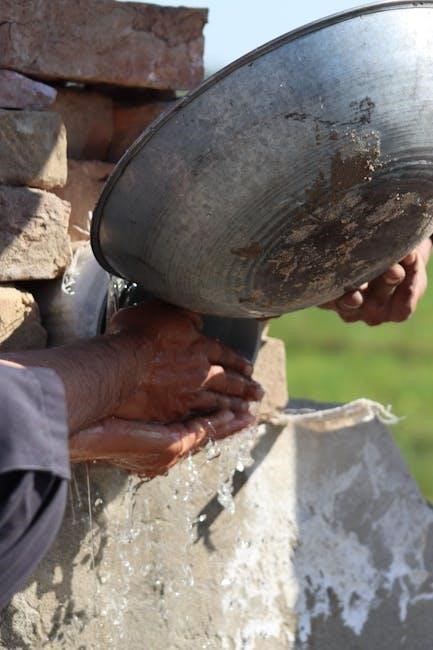
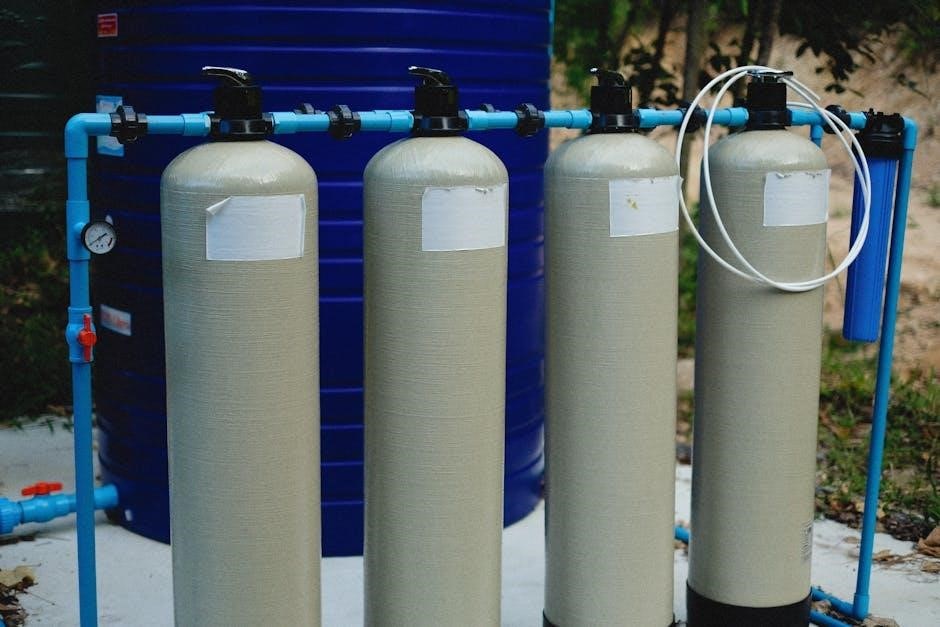
Essential components – the resin tank, brine tank, control valve, and drain line – work in harmony during manual regeneration to cleanse and restore the system.
Each part plays a vital role in the process, ensuring effective removal of hardness minerals and optimal water softening performance.
The Resin Tank: The Heart of the System
The resin tank is undeniably the central component of any water softening system, and particularly critical during manual regeneration. It’s a robust, pressure-resistant vessel housing countless resin beads, which are the workhorses responsible for removing hardness minerals from your water supply.
These tiny beads are specially manufactured to attract and bind with calcium and magnesium ions – the culprits behind hard water – while releasing sodium ions in exchange. Over time, these resin beads become saturated with hardness minerals, losing their ability to soften water effectively.
This is where regeneration comes into play. During the regeneration cycle, a concentrated brine solution flows through the resin tank, overwhelming the beads with sodium ions. This forces the calcium and magnesium ions to detach from the beads and be flushed away, effectively “recharging” the resin for continued softening. The resin tank’s integrity and the quality of the resin beads directly impact the overall efficiency and longevity of your water softening system.
The Brine Tank: Salt Storage and Dissolution
The brine tank serves as the dedicated reservoir for the salt – typically rock salt, solar salt, or pellet salt – essential for the regeneration process of your water softener. It’s a crucial, yet often overlooked, component that directly impacts the system’s ability to effectively recharge the resin beads.
During regeneration, water enters the brine tank, dissolving the salt to create a highly concentrated brine solution. This saturated solution is then drawn into the resin tank, providing the necessary sodium ions to displace the accumulated calcium and magnesium.
Maintaining a properly filled brine tank is vital; insufficient salt levels can lead to inadequate regeneration and reduced water softening performance. The tank’s design facilitates the dissolution of salt, ensuring a consistent and potent brine solution is available when needed. Regular inspection and cleaning of the brine tank are essential to prevent salt bridging and ensure optimal functionality.
The Control Valve: Orchestrating the Cycle
The control valve is the brain of your manual water softener, meticulously directing the flow of water throughout the regeneration process. It’s responsible for initiating and managing each stage – backwash, brine draw, slow rinse, fast rinse, and brine refill – with precise timing and coordination.
In a manual system, the homeowner initiates the regeneration cycle by setting the valve to the appropriate position, triggering the sequence of events. The valve regulates water flow, opening and closing ports to direct water to the resin tank, brine tank, and drain line as needed.
Timer-based systems utilize the control valve to automatically initiate regeneration on a pre-set schedule. Proper valve function is paramount; malfunctions can disrupt the regeneration cycle, leading to hard water and reduced system efficiency. Regular inspection and maintenance of the control valve are crucial for reliable operation.
The Drain Line: Waste Water Disposal
The drain line is a critical, yet often overlooked, component of a manual water softener system, serving as the pathway for expelling waste water generated during the regeneration cycle. This waste consists of flushed-out hardness minerals – calcium and magnesium – along with excess brine solution used to recharge the resin beads.
Proper drain line installation is essential to prevent backflow contamination and ensure efficient waste removal. It must be adequately sized to handle the flow rate during the fast rinse stage, preventing backups and maintaining optimal regeneration performance.
The drain line should terminate in a suitable drain, such as a floor drain or laundry tub, and adhere to local plumbing codes. Regular inspection for clogs or obstructions is vital, as a blocked drain line can disrupt the regeneration process and compromise water quality.
Manual Regeneration: When and How Often?
Regeneration frequency depends on water hardness and usage; monitor for signs like reduced water pressure or hard water spots, then initiate the cycle.
Consistent monitoring and timely regeneration ensure optimal softener performance and continued delivery of soft, clean water for your household needs.
Determining Regeneration Frequency
Establishing a consistent regeneration schedule for your manual water softener requires careful consideration of several key factors. Primarily, the hardness of your incoming water supply is paramount; higher hardness levels necessitate more frequent regeneration cycles. Regular water testing, either through a professional service or a DIY test kit, will provide accurate readings.
Secondly, your household’s water consumption plays a significant role. Larger families or those with high water usage will deplete the resin bed’s capacity faster, requiring more frequent regeneration. Conversely, smaller households with lower consumption can extend the intervals between cycles.
A general guideline suggests starting with regeneration every few days and adjusting based on observed water quality. Pay attention to indicators like reduced water pressure, the return of hard water spots on dishes and fixtures, or a noticeable decrease in soap lathering. These signs signal the resin bed is nearing saturation and regeneration is needed. Keeping a log of regeneration dates and water quality observations will help refine your schedule over time, optimizing efficiency and preventing unnecessary salt usage.
Signs Your Water Softener Needs Regeneration
Recognizing the indicators that your manual water softener requires regeneration is crucial for maintaining consistently soft water. One of the most common signs is a noticeable decrease in water pressure throughout your home, particularly during peak usage times. This occurs as the resin bed becomes saturated with hardness minerals, restricting water flow.
Another telltale sign is the reappearance of hard water spots on glassware, dishes, and bathroom fixtures. These spots indicate calcium and magnesium are no longer being effectively removed from the water supply. You might also observe a diminished lathering ability of soaps and detergents, requiring you to use more product to achieve the same cleaning results.
Furthermore, a slightly metallic or salty taste in your water can signal the need for regeneration. Regularly monitoring these signs will allow you to proactively address the issue and prevent the inconvenience of hard water impacting your daily life.
Step-by-Step Manual Regeneration Instructions
Initiating a manual regeneration cycle typically involves several key steps. First, bypass the water softener by switching the valve to the “bypass” position, cutting off water flow through the unit. Next, locate the control valve and move it to the “regeneration” or “manual” setting, initiating the cycle. Observe the brine tank; during regeneration, saltwater will be drawn into the resin tank to cleanse the resin beads.
Allow the complete cycle to run uninterrupted, which usually takes between 60 to 90 minutes. Once finished, return the control valve to the “service” position, gradually reintroducing softened water into your home’s plumbing. It’s essential to avoid using hot water during the initial flush, as it can draw untreated hard water from the water heater.
Finally, monitor water quality for a day or two to confirm successful regeneration and enjoy the benefits of soft water once again.

Troubleshooting Common Regeneration Issues
Addressing regeneration problems like low pressure, salt bridges, or insufficient brine draw is vital for optimal softener function and consistent water quality.
Identifying these issues promptly allows for timely intervention, preventing reduced softening efficiency and ensuring a reliable supply of soft water.
Regular monitoring and proactive solutions maintain peak performance and extend the lifespan of your water softening system.
Low Water Pressure During Regeneration
Experiencing reduced water pressure during the regeneration cycle is a common concern with manual water softeners, often stemming from several potential causes. A partially clogged drain line is a frequent culprit, restricting the flow of wastewater and creating backpressure. Inspect the drain line for kinks or obstructions and ensure it isn’t excessively long, as extended lengths can contribute to pressure loss.
Another possibility is a restricted flow within the resin tank itself, potentially due to accumulated sediment or debris. Backwashing effectively removes this, but persistent issues may require a more thorough cleaning of the tank. Furthermore, a malfunctioning control valve could be hindering proper water flow during specific regeneration stages.
Finally, ensure your home’s main water pressure is adequate; a generally low pressure supply will naturally impact softener performance. Addressing these factors will restore optimal pressure during regeneration and maintain efficient operation.
Salt Bridge Formation in the Brine Tank
Salt bridging, a common issue in manual water softener systems, occurs when a hard crust of salt forms at the surface of the brine tank, preventing the water from dissolving the salt needed for regeneration. This happens when undissolved salt compacts, creating a barrier between the water and the remaining salt pile.
Humidity and infrequent softener use contribute to this problem, as moisture causes salt crystals to fuse together. To resolve a salt bridge, carefully break it apart with a tool – avoid metal to prevent tank damage – and ensure the salt falls back into the water.
Preventative measures include using high-quality salt, avoiding overfilling the brine tank, and periodically adding warm water to encourage dissolution. Regular monitoring and proactive maintenance will minimize salt bridge formation and ensure consistent regeneration performance.
Insufficient Brine Draw
Insufficient brine draw during regeneration signifies that the water softener isn’t pulling enough salt water from the brine tank into the resin tank to effectively recharge the resin beads. This results in inadequate removal of accumulated hardness minerals, leading to softened water quality issues. Several factors can cause this, including a clogged injector nozzle, a kinked or blocked brine line, or a malfunctioning control valve.
A restricted injector prevents proper suction, while obstructions in the brine line hinder brine flow; To address this, inspect and clean the injector nozzle, ensuring it’s free of debris. Verify the brine line is clear and unobstructed.
If the problem persists, the control valve may require professional attention. Correcting insufficient brine draw is vital for maintaining optimal softener performance and consistently soft water.

Maintaining Your Water Softener for Optimal Performance
Regular maintenance, including salt type selection and brine tank cleaning, is essential for peak efficiency. Inspecting injector nozzles prevents clogs and ensures consistent regeneration.
Choosing the Right Salt Type
Selecting the appropriate salt is paramount for effective manual water softener regeneration and longevity of the system. Several options exist, each with unique characteristics impacting performance and cost. Rock salt, the most economical choice, contains impurities that can lead to sludge buildup within the brine tank, potentially causing operational issues and requiring more frequent cleaning.
Solar salt, evaporated from seawater, offers higher purity than rock salt, minimizing sludge formation and promoting consistent regeneration. However, it typically comes at a slightly higher price point. Evaporated salt, the purest form, is specifically designed for water softeners, ensuring optimal dissolution and minimal residue.
Consider your water quality and budget when making your selection. Regardless of the type chosen, always avoid salts containing iron, as iron can foul the resin beads, diminishing their effectiveness. Proper salt choice contributes significantly to a smoothly functioning and long-lasting water softening system.
Regular Brine Tank Cleaning
Consistent brine tank maintenance is vital for optimal manual water softener performance. Over time, undissolved salt, sediment, and mineral deposits accumulate, reducing the tank’s capacity and hindering the regeneration process. Ideally, the brine tank should be cleaned at least annually, or more frequently if you notice salt bridging or reduced water softening efficiency.
Begin by disconnecting the power supply to the softener. Remove any remaining water and salt from the tank. Inspect for salt bridges – hard crusts forming on the salt surface – and break them up. Thoroughly scrub the tank’s interior with warm water and a mild detergent, avoiding abrasive cleaners that could damage the tank lining.
Rinse the tank completely to remove any detergent residue before refilling with fresh salt. A clean brine tank ensures a concentrated brine solution, maximizing the effectiveness of each regeneration cycle and prolonging the life of your water softener.
Inspecting and Cleaning Injector Nozzles
The injector nozzles are critical components in a manual water softener’s regeneration process, responsible for creating the necessary suction to draw brine from the brine tank into the resin tank. Regular inspection and cleaning are essential to prevent blockages that can compromise regeneration efficiency.
Locate the injector assembly, typically near the control valve. Carefully disassemble the injector, noting the position of each part for reassembly. Inspect the nozzle openings for any mineral buildup or debris. Use a small wire or specialized cleaning tool to gently clear any obstructions – avoid using sharp objects that could damage the nozzles.
Rinse the components thoroughly with clean water before reassembling the injector. Ensuring clear injector nozzles guarantees proper brine draw, leading to effective resin bead regeneration and consistently soft water. Neglecting this step can result in insufficient salt usage and reduced softening capacity.

Advanced Considerations
Optimizing regeneration involves understanding water usage patterns, temperature impacts, and timer settings for peak efficiency and prolonged softener lifespan.
Adjusting these factors ensures tailored performance, minimizing salt consumption and maximizing water softening capabilities for a sustainable system.
Water Usage and Regeneration Efficiency
Water softener regeneration is intrinsically linked to household water consumption; higher usage necessitates more frequent cycles to maintain optimal softening performance. Understanding your family’s daily and weekly water demands is paramount for calibrating regeneration schedules. A system regenerating too often wastes water and salt, increasing operational costs and environmental impact. Conversely, infrequent regeneration leads to hard water breakthrough, diminishing the softener’s effectiveness and potentially causing scale buildup in plumbing.
Monitoring water meter readings can provide valuable insights into consumption patterns. Consider implementing water-saving fixtures throughout your home to reduce overall demand, thereby extending the intervals between regeneration cycles. Furthermore, some advanced systems offer demand-initiated regeneration, automatically adjusting the cycle based on actual water usage, maximizing efficiency and minimizing waste. This proactive approach ensures a balance between soft water availability and responsible resource management.
Impact of Water Temperature on Regeneration
Water temperature significantly influences the efficiency of the regeneration process within a manual water softener system. While not as critical as brine concentration or flow rates, cooler water generally enhances the ion exchange process, allowing for more complete removal of calcium and magnesium ions from the resin beads. Warmer water, conversely, can slightly reduce this efficiency, potentially requiring longer regeneration cycles or more frequent occurrences to achieve the desired water softness.
However, extremely cold water can hinder salt dissolution in the brine tank, impacting the brine solution’s effectiveness. Maintaining a consistent water temperature, ideally within the range of 40-80°F (4-27°C), is recommended for optimal performance. Consider the location of your water softener and potential temperature fluctuations, especially during colder months, to ensure consistent regeneration results and prolong the system’s lifespan.
Understanding Regeneration Timer Settings
Regeneration timer settings are crucial for automated systems, dictating when the softener initiates the cleaning cycle. While manual systems require user initiation, understanding timer principles is beneficial for those with semi-automatic options. Timers typically allow adjustments for regeneration frequency, cycle duration, and start time. Setting the regeneration to occur during off-peak water usage hours minimizes pressure drops and conserves water.
Frequency is determined by water hardness and consumption; harder water and higher usage necessitate more frequent cycles. Cycle duration controls the length of each regeneration stage, impacting efficiency. Incorrect settings can lead to insufficient cleaning or wasted water and salt. Regularly reviewing and adjusting these settings based on water quality tests and usage patterns ensures optimal softener performance and longevity.