Onkyo TX-NR656 User Manual: Comprehensive Guide
This comprehensive guide details setup‚ operation‚ and troubleshooting for the Onkyo TX-NR656 AV receiver‚ including PDF manual access and advanced instructions.
Welcome to the Onkyo TX-NR656‚ a versatile AV receiver designed to elevate your home entertainment experience. This receiver offers a powerful blend of performance and features‚ delivering immersive sound and seamless connectivity. This user manual provides detailed instructions for optimal setup and operation.
Whether you’re a seasoned audiophile or new to home theater‚ this guide will walk you through every step‚ from initial unboxing to advanced customization. Explore features like Dolby Atmos and DTS:X for captivating surround sound. Access the advanced manual in PDF format for in-depth information. Ensure you consult the instructions for a smooth setup process and enjoy the full potential of your Onkyo TX-NR656.
Key Features and Specifications
The Onkyo TX-NR656 boasts impressive specifications‚ including discrete 7.2 channel processing and support for Dolby Atmos and DTS:X immersive audio. It delivers 100W per channel‚ ensuring powerful and clear sound reproduction. Key features include HDMI connectivity with HDCP 2.2 compatibility‚ supporting 4K/60Hz video passthrough.
Network connectivity via Wi-Fi and Ethernet enables streaming services and control via mobile apps. The receiver also features a front-panel USB port for direct digital audio playback. Detailed specifications are available in the PDF user manual. Explore advanced settings for customized audio experiences‚ as outlined in the instructions.

Setting Up Your Onkyo TX-NR656
Proper setup is crucial for optimal performance. This section guides you through unboxing‚ speaker connections‚ HDMI configuration‚ and network setup‚ per the manual.
Unboxing and Initial Inspection
Carefully unpack your Onkyo TX-NR656‚ ensuring all components are present. Verify the receiver‚ remote control‚ manuals‚ AM/FM antenna‚ and any included accessories are accounted for. Inspect the unit for any visible damage sustained during shipping – note any dents‚ scratches‚ or broken parts immediately.
Retain the original packaging for potential future transport or warranty claims. Before connecting any cables‚ visually inspect the rear panel connectors for any signs of damage or loose components. Confirm the power cord is in good condition. Refer to the included quick start guide for a preliminary overview before diving into the full manual for detailed setup instructions.
Speaker Connection Guide
Proper speaker connection is crucial for optimal audio performance. Before connecting‚ power off the TX-NR656. Identify the correct speaker terminals on the receiver’s rear panel – these are color-coded for easy identification. Use speaker wire of appropriate gauge (refer to the manual for recommendations) and ensure consistent polarity (+ to +‚ ⎼ to -) across all connections.
Securely attach the speaker wires to the terminals‚ avoiding loose strands. Double-check all connections before powering on the receiver. Incorrect wiring can result in poor sound quality or damage to the unit. Consult the manual’s diagrams for specific configurations and instructions.
Connecting Front Speakers
Connect the front left and right speakers to the corresponding terminals on the Onkyo TX-NR656’s rear panel‚ typically labeled “FRONT L” and “FRONT R”. Ensure correct polarity – match the positive (+) and negative (-) terminals on both the receiver and the speakers. Use speaker wire of adequate gauge for optimal signal transmission; the manual provides specific recommendations.
Securely fasten the speaker wires to the terminals‚ preventing any loose connections. Verify that the wires are firmly attached before powering on the receiver. Proper connection of the front speakers is vital for establishing a strong and immersive soundstage. Refer to the receiver’s instructions for detailed diagrams.
Connecting Center Speaker
Connect the center speaker to the “CENTER” speaker terminals on the Onkyo TX-NR656’s rear panel‚ again observing correct polarity – positive (+) to positive (+) and negative (-) to negative (-). The center channel is crucial for clear dialogue reproduction in movies and enhances vocal clarity in music. Use speaker wire of the same gauge as the front speakers for consistent performance.
Ensure a secure connection at both the receiver and speaker ends. The manual emphasizes the importance of proper wiring for optimal sound quality. Position the center speaker directly below or above your television‚ aligned with the center of the screen‚ for the best sonic experience. Consult the instructions for placement guidance.
Connecting Surround Speakers
Connect your surround speakers to the “SURROUND” or “REAR” speaker terminals on the Onkyo TX-NR656’s rear panel‚ meticulously matching positive (+) and negative (-) polarities. These speakers create an immersive sound field‚ enhancing the sense of spaciousness in movies and music. Utilize speaker wire of the same gauge as the front and center channels for balanced audio output.
Proper placement is key; position surround speakers to the sides or slightly behind the listening position‚ angled inwards. The manual details optimal angles for various room configurations. Secure connections are vital for clear sound reproduction. Refer to the instructions for specific wiring diagrams and placement recommendations.
Subwoofer Connection
Connect your subwoofer using an RCA cable to the “SUBWOOFER OUT” jack on the Onkyo TX-NR656’s rear panel. Ensure a secure connection for optimal bass performance. The manual guides you through initial subwoofer settings‚ including crossover frequency and level adjustments. Proper subwoofer placement significantly impacts sound quality; experiment with locations to find the best bass response in your room;
Initial setup involves setting the subwoofer’s crossover frequency to match your main speakers’ capabilities. Adjust the subwoofer level to blend seamlessly with the other channels. Consult the instructions for detailed calibration procedures and troubleshooting tips.
HDMI Connection and Configuration
Connect your HDMI sources – Blu-ray players‚ gaming consoles‚ and streaming devices – to the Onkyo TX-NR656’s HDMI inputs. The receiver supports 4K Ultra HD and HDR content. Refer to the manual for optimal HDMI cable specifications. Proper configuration ensures correct video and audio transmission.
Access the on-screen display (OSD) to configure HDMI settings‚ including input assignments and EDID control. This allows the receiver to communicate effectively with your display. The instructions detail troubleshooting steps for common HDMI signal issues‚ such as no picture or distorted video. Ensure your devices are compatible with HDCP 2.2 for protected content.
Connecting HDMI Sources
Connect Blu-ray players‚ gaming consoles‚ and streaming devices to the Onkyo TX-NR656’s HDMI inputs‚ ensuring proper cable connections for optimal signal quality. The receiver supports multiple HDMI inputs for versatile connectivity. Power off all devices before connecting or disconnecting HDMI cables.
Utilize the labeled HDMI inputs on the rear panel‚ noting which input corresponds to each source. The user manual provides a diagram illustrating the input layout. After connecting‚ power on the devices and select the corresponding HDMI input on the receiver using the remote control or front panel controls. Verify video and audio output on your display.
HDMI Signal Issues Troubleshooting
If experiencing “no HDMI signal‚” first verify cable connections at both the receiver and source device. Ensure the correct HDMI input is selected on the Onkyo TX-NR656. Try a different HDMI cable to rule out a faulty cable. Power cycle both the receiver and the source device—completely disconnect power‚ wait‚ then reconnect.
Check for firmware updates for the receiver‚ as these often address HDMI compatibility issues. Consult the user manual for update procedures. If problems persist‚ attempt a factory reset (refer to the manual for instructions). Confirm the source device’s output resolution is compatible with the receiver and display.
Network Connection and Setup
Connecting your Onkyo TX-NR656 to your home network unlocks streaming services and firmware updates. For Wi-Fi‚ access the receiver’s setup menu and select your network from the available list‚ entering the password when prompted. Alternatively‚ use the Ethernet connection for a more stable link—simply connect an Ethernet cable from the receiver to your router.
Once connected‚ the receiver will obtain an IP address. Verify network connectivity within the setup menu. Troubleshooting network issues may involve checking router settings or restarting both the receiver and router. Refer to the user manual for detailed network configuration options.
Connecting to Your Home Network (Wi-Fi)
To connect your Onkyo TX-NR656 via Wi-Fi‚ navigate to the network setup section in the receiver’s on-screen display (OSD). Select “Wi-Fi” as the connection method. The receiver will scan for available wireless networks. Choose your network from the list and enter your network password using the on-screen keyboard.
Ensure your Wi-Fi network is functioning correctly before starting. A strong signal strength is recommended for optimal performance. If the connection fails‚ double-check the password and network name. Refer to the user manual for advanced Wi-Fi settings and troubleshooting tips‚ including WPS setup options.
Connecting to Your Home Network (Ethernet)
For a wired connection‚ locate the Ethernet port on the rear panel of your Onkyo TX-NR656 receiver. Connect one end of an Ethernet cable to the receiver’s port and the other end to an available port on your router or network switch. The receiver will automatically detect the Ethernet connection and attempt to obtain an IP address.
If the receiver doesn’t automatically connect‚ navigate to the network settings in the OSD and select “Ethernet.” Verify that the receiver is set to obtain an IP address automatically (DHCP). Consult your router’s documentation for specific network configuration details. A stable Ethernet connection provides a reliable network experience.

Operating the Onkyo TX-NR656
Explore the receiver’s features using the remote‚ OSD‚ and input selection. Customize sound modes‚ including Dolby Atmos and DTS:X‚ for optimal audio.
Remote Control Overview
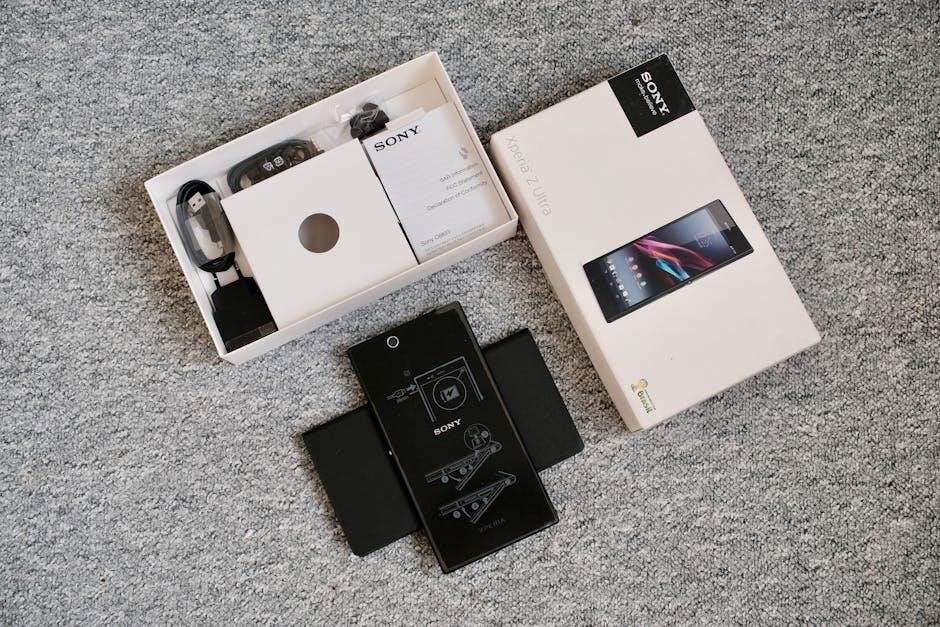
The Onkyo TX-NR656’s remote control provides comprehensive command of your home theater system. Key buttons include power‚ input selection‚ volume control‚ and mute. Dedicated buttons allow quick access to sound modes like Dolby Atmos and DTS:X‚ enhancing your listening experience. Navigation buttons control the on-screen display (OSD) for settings adjustments.
Additional features include direct access to radio tuner functions and controls for Zone 2 operation‚ if configured. The setup button initiates the speaker configuration wizard‚ simplifying initial setup. Understanding each button’s function unlocks the full potential of your receiver‚ offering seamless control and customization. Familiarize yourself with the layout for effortless operation.
On-Screen Display (OSD) Navigation
The Onkyo TX-NR656’s On-Screen Display (OSD) offers intuitive control over receiver settings. Accessed via the setup button on the remote‚ the OSD presents a menu-driven interface. Use the navigation buttons (up‚ down‚ left‚ right) to highlight desired options‚ and the enter button to select.
Key sections include input assignment‚ audio settings (Dolby Atmos‚ DTS:X)‚ speaker configuration‚ and network settings. The OSD allows precise adjustments to sound modes‚ equalization‚ and crossover frequencies. Return to the previous menu using the back or exit button. The OSD’s clear layout simplifies complex configurations‚ ensuring optimal performance.
Input Source Selection
Selecting input sources on the Onkyo TX-NR656 is straightforward. Utilize the “Input” button on the remote control to cycle through available inputs – HDMI 1-8‚ Phono‚ Optical‚ and Network. Alternatively‚ the on-screen display (OSD) provides a visual list for direct selection.
Each input can be customized with a user-defined name for easy identification. The receiver remembers the last source used for each input. Ensure connected devices are powered on before selecting their corresponding input. Proper source selection guarantees accurate audio and video transmission‚ optimizing your entertainment experience.
Sound Mode Settings
The Onkyo TX-NR656 offers diverse sound modes to enhance your listening experience. Options include Stereo‚ Direct‚ Dolby Surround‚ and various DSP modes. Access these settings via the “Sound” menu on the on-screen display (OSD).
Dolby Atmos and DTS:X configurations are available for immersive surround sound‚ requiring compatible speakers. Customize each mode to your preference‚ adjusting parameters like crossover frequency and level. Experiment with different settings to find the optimal sound for various content types – movies‚ music‚ and games. Proper configuration unlocks the receiver’s full audio potential.
Dolby Atmos Configuration
To configure Dolby Atmos on your Onkyo TX-NR656‚ navigate to the “Speaker Configuration” menu and select “Dolby Atmos.” Ensure your speakers are correctly assigned – height speakers are crucial for the immersive effect. The receiver supports up to a 5.1.2 or 7.1.2 Atmos setup.
Adjust speaker levels and distances for optimal sound reproduction. Utilize the Auto Calibration feature for a simplified setup process‚ or manually fine-tune settings for personalized results. Verify compatibility with your source content; Dolby Atmos requires Atmos-encoded soundtracks; Proper configuration delivers a truly three-dimensional audio experience.
DTS:X Configuration
Configuring DTS:X on the Onkyo TX-NR656 involves accessing the “Speaker Configuration” menu and selecting “DTS:X.” Similar to Dolby Atmos‚ accurate speaker assignments‚ particularly for height channels‚ are vital for a fully immersive soundstage. The receiver supports configurations up to 7.1.4 with DTS:X;
Adjust speaker levels and distances meticulously to ensure precise audio placement. The Auto Calibration system can assist‚ but manual adjustments often yield superior results. Confirm that your source material is DTS:X encoded to fully benefit from this technology. Proper setup unlocks object-based audio‚ enhancing realism and depth.
Radio Tuner Operation
The Onkyo TX-NR656 features a built-in AM/FM radio tuner. To access it‚ select “Radio” as the input source using the remote or front panel. Initiate auto-tuning to scan for available stations‚ or manually enter frequencies. You can store preferred stations into preset memory locations for quick access.
Utilize the “Tune” buttons for incremental frequency adjustments. The display shows station information‚ including frequency and program type (if available). Explore features like station naming for easy identification. Ensure a properly connected FM antenna for optimal reception. Enjoy listening to your favorite radio broadcasts through your home theater system.

Troubleshooting Common Issues
Resolve typical problems like no HDMI signal or audio distortion with this section’s guidance. Network connectivity issues are also addressed for seamless operation.
No HDMI Signal Troubleshooting
Experiencing a blank screen? Begin by verifying the HDMI cable connection to both the Onkyo TX-NR656 and your source device (Blu-ray player‚ gaming console‚ etc.). Ensure the cable is securely plugged in at both ends. Next‚ cycle through the input sources on your receiver using the remote control or front panel buttons to confirm the correct input is selected.
If the issue persists‚ try a different HDMI cable to rule out a faulty cable. Also‚ test the source device with a different display (TV or projector) to determine if the problem lies with the source itself. Check the HDMI settings on both the receiver and the source device‚ ensuring compatibility (e.g.‚ HDCP version). A power cycle of both devices can sometimes resolve signal handshake issues. Finally‚ consult the Onkyo manual for specific HDMI compatibility information.
Audio Distortion Troubleshooting
Hearing crackling‚ buzzing‚ or unclear sound? First‚ verify speaker wire connections to both the Onkyo TX-NR656 and your speakers. Ensure wires are securely attached and free from damage. Check speaker polarity (+/-) to confirm correct wiring; reversed polarity can cause phase cancellation and distortion.
Next‚ lower the volume level to see if the distortion diminishes. If so‚ the issue might be amplifier overload. Experiment with different sound modes (Dolby‚ DTS) as some may be more prone to distortion with certain sources. Confirm the source material isn’t inherently distorted. Finally‚ consult the manual for speaker impedance compatibility; mismatched impedance can lead to audio problems.
Network Connectivity Problems
Experiencing difficulty connecting your Onkyo TX-NR656 to your home network? Begin by verifying your Wi-Fi router is functioning correctly and broadcasting a signal. Ensure the receiver is within range of the router‚ minimizing interference from walls or other devices. Double-check the Wi-Fi password entered during setup is accurate.
If using Ethernet‚ confirm the cable is securely connected to both the receiver and your router. Try a different Ethernet cable to rule out a faulty connection. Access the receiver’s network settings via the on-screen display and confirm it’s obtaining an IP address. Refer to the manual for detailed network configuration instructions.

Advanced Settings and Customization
Explore Zone 2 configuration‚ firmware updates for optimal performance‚ and factory reset options within the Onkyo TX-NR656’s advanced settings menu.
Zone 2 Configuration
The Onkyo TX-NR656 allows for independent audio playback in a second zone‚ expanding your entertainment options throughout your home. To configure Zone 2‚ access the setup menu via the On-Screen Display (OSD). You can select the audio source for Zone 2‚ which can be different from the main zone.
Speaker connections for Zone 2 are typically made using the dedicated Zone 2 speaker terminals on the receiver’s rear panel. Ensure proper polarity when connecting the speakers. Volume control for Zone 2 can be managed independently‚ either through the remote control or via the OSD.
Furthermore‚ you can assign an input source specifically to Zone 2‚ allowing you to enjoy different content in each zone simultaneously. This feature enhances flexibility and caters to diverse listening preferences within your household.
Firmware Updates
Maintaining up-to-date firmware on your Onkyo TX-NR656 is crucial for optimal performance‚ bug fixes‚ and access to new features. Firmware updates are typically delivered via network connection. Access the update function through the receiver’s setup menu‚ navigating to the firmware section within the OSD.
The receiver will automatically search for available updates on the Onkyo server. If an update is found‚ follow the on-screen prompts to download and install it. Important: Do not interrupt the update process‚ as this could potentially damage the receiver’s software.
Ensure a stable network connection throughout the update. After the update completes‚ the receiver will restart automatically. Regularly checking for updates ensures your TX-NR656 operates at its best.
Resetting to Factory Defaults
Resetting your Onkyo TX-NR656 to factory defaults restores all settings to their original state‚ effectively erasing any custom configurations you’ve made. This is useful for troubleshooting persistent issues or preparing the receiver for sale or transfer.
To initiate a reset‚ navigate to the setup menu on the Onkyo TX-NR656 using the on-screen display (OSD). Locate the “Reset” or “Factory Reset” option‚ typically found within the general settings or initialization section. Confirm your decision as this action is irreversible without reconfiguring your preferences.
The receiver will power cycle and revert to its original factory settings. Be aware that all saved stations‚ input assignments‚ and speaker configurations will be lost during this process.

Service Manual Information
Access detailed service resources for the Onkyo TX-NR656‚ including panel information and reset procedures‚ designed for authorized service centers and technicians.
Accessing Service Manual Resources
Locating the Onkyo TX-NR656 service manual is crucial for qualified technicians undertaking repairs or advanced troubleshooting. These resources aren’t typically available to general consumers‚ focusing instead on providing detailed schematics‚ component layouts‚ and diagnostic procedures.
Authorized service centers can access these manuals through Onkyo’s professional support network. The service manual includes vital information like panel controls‚ block diagrams‚ PCB layouts‚ and detailed reset procedures. It also outlines specific voltage points and testing procedures to accurately diagnose and resolve complex issues.
While a direct download link isn’t readily available publicly‚ searching specialized technician forums or contacting Onkyo directly may yield results. Remember‚ attempting repairs without proper training and documentation can void warranties and potentially damage the unit.
Panel Information and Reset Procedures
The Onkyo TX-NR656’s front panel features essential controls and indicators‚ including power‚ input selection‚ volume‚ and function buttons. Understanding these elements is key to basic operation. The service manual details each control’s function and associated circuitry.
Resetting the receiver can resolve software glitches. A soft reset‚ achieved through the on-screen menu‚ restores settings without affecting custom configurations. A factory reset‚ however‚ erases all personalized settings‚ returning the unit to its original state.
The service manual outlines specific reset procedures‚ including hardware reset options for situations where the OSD is inaccessible. These procedures involve specific button combinations or internal component access‚ requiring caution and technical expertise.